

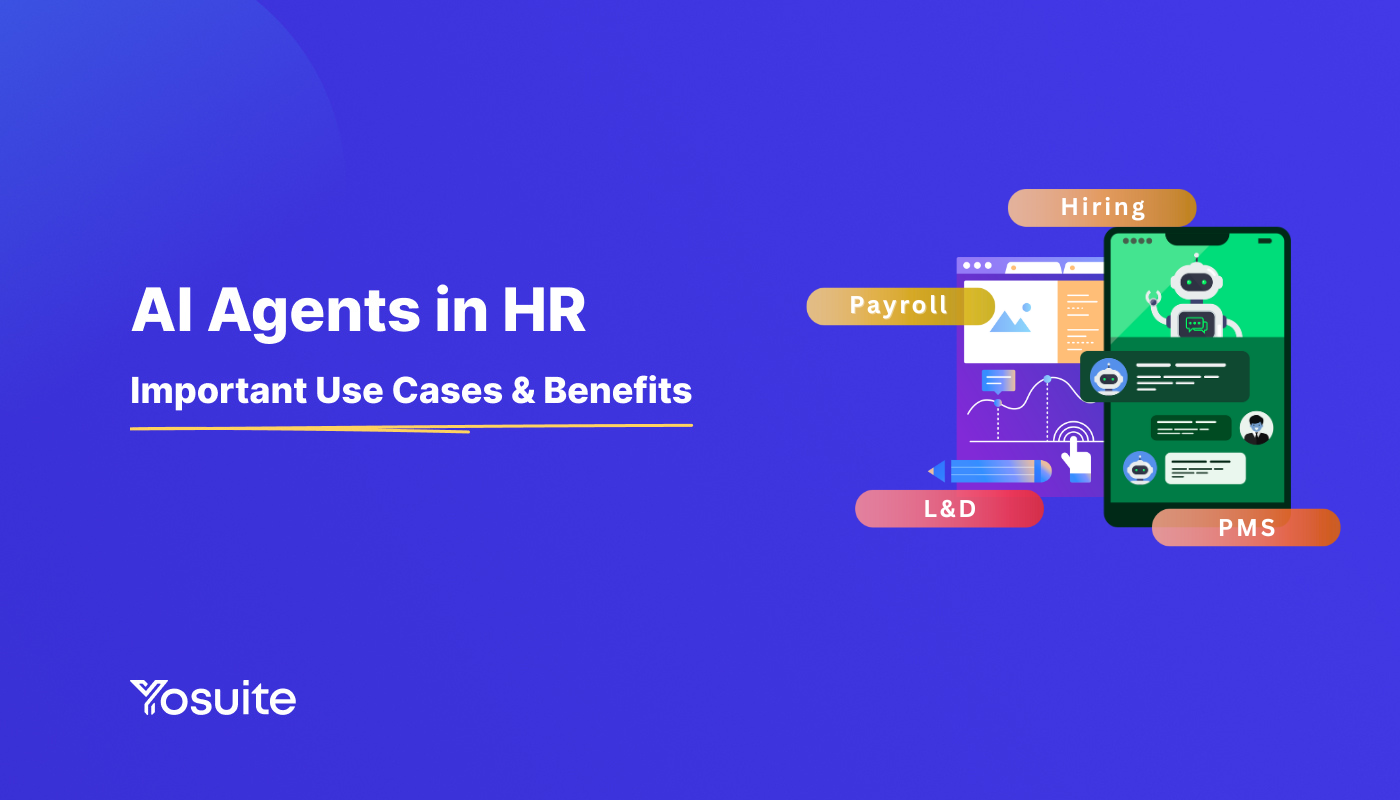
AI agents in HR departments handle routine tasks, analyze data, sort CVs, schedule interviews, and even chat with employees. All these agentic AI actions help HR professionals like you save time and focus on other development areas.
Among the top HR trends of 2026, using AI for HR rigorously stands out. And the HR world is just starting to scratch the surface with AI agents.
Many startups and SMBs have already adopted AI tools to improve and speed up their daily operations. Helping them boost revenue1. And autonomous AI agents in HR can learn, adapt, and act with much less human intervention than before.
These actions help SMBs perform faster, expand operations more easily, onboard talents more accurately, and boost revenue consistently.
I’ll cover some key uses and examples of how your team will benefit from onboarding these teammates.
Key Takeaways:
➡️ AI agents help expedite hiring steps and track candidate progress autonomously, helping you work on other strategic matters.
➡️ The agents also help to review and suggest data-driven feedback for employee performance appraisals.
➡️ HR professionals can also use AI agents to record, track, and suggest training initiatives, personalized for each trainee.
➡️ Besides these, payroll processing becomes easy and fast through AI integration in HR.
➡️ You need to balance using AI agents with ethical issues and creating the right governance for the use.
What are Top Use Cases of AI Agents in HR?
HR professionals and SMB owners usually need to ensure 5 vital HR activities across all industries:
- Hiring (along with onboarding)
- Attendance management (plus time-off tracking)
- Payroll processing (including benefits administration)
- Performance tracking
- And employee training & development
Attendance tracking and management doesn’t really need AI intervention, because of its simple and direct nature. However, using agentic AI in the other four functions adds more advantage and speeds up the processes manifolds.
Hiring Smarter and Faster
AI agents used to hire the right employees add job posts to portals, screen the right candidates, and update you about the right matches. You don’t need to bother about scanning resumes quickly and filtering out the unqualified applicants.
Already, 81% of companies reported cutting their resume review time by 75% after adopting AI tools.
The agents also act as sourcing tools that visit job boards, job portals, and even social media to find passive candidates that fit your job requirements. You just need to give access to the hiring accounts or profiles for the agents to review the candidates.
Moreover, AI assistants can handle the back-and-forth of scheduling. These include finding open slots, sending calendar invites, and conducting preliminary Q&As using chatbots. L’Oréal’s AI chatbot, “Mya”, is used to engage and pre-screen applicants, cutting time-to-hire by 30% for high-volume roles.
According to Gartner, 76% of HR leaders believe that if their organizations don’t adopt AI (including generative AI) in the next 1–2 years, they will fall behind.2
Improving candidate experience
AI recruitment chatbots and assistants keep candidates engaged and informed, which reflects well on your employer brand. These bots can answer applicant FAQs instantly (“What’s the status of my application?”), send reminders to complete assessments, and provide feedback.
Electrolux saw an 84% increase in completed job applications and a 51% drop in incomplete submissions after deploying an AI recruiting platform. The bot guided candidates through the process, resulting in far fewer people abandoning their applications.
All these efficiencies add up to real dollar savings, a critical concern for SMBs. By automating resume screening, communication, and scheduling, companies can reduce the need for contract recruiters or excessive job advertising.
Unilever, the global FMCG giant, pulled off one the most popular success stories with AI in recruitment. Unilever implemented an AI-driven hiring process using gamified online assessments and AI-scored video interviews. The results were stunning! The company reduced its average time-to-hire from four months to just four weeks, and saved an estimated 70,000+ hours of interview time per year.
Payroll Accuracy, Compliance, and Insights
AI agents easily automate payroll calculations. And related data entry. AI agents perform as tireless payroll assistants that ensure precision, compliance, and strategic insights. More than what even AI prompts would offer.
In a recent survey, 77% of HR executives said they now use AI in payroll processing. The agents help with automating gross-to-net pay calculations, all types of deductions, overtime pay rates, and tax withholdings.
You can update AI payroll agents instantly with new tax rules or labor law changes. The latest models retain and learn from their memories. So it helps to ensure compliant calculations and policies, without constant human intervention.
You can also carry out predictive analytics using payroll agents. These agents can forecast labor costs for upcoming quarters, model the payroll impact of hiring new employees or giving a 5% raise, and help budget more accurately.
Ask the agent something like “What will our total payroll be if we expand our sales team by 10% next year?” And receive a comprehensive, researched answer by the agent.
For that though, you have to ensure proper access to the right resources and sites. AI-enabled payroll analytics help SMB leaders optimize staffing. For example, Walmart uses AI to forecast staffing needs and optimize schedules, leading to a 15% reduction in labor costs. But they still meet customer demand. That’s payroll agents helping make broader business decisions.
Data-backed Performance Management for Employee Success
Using AI agents, you can bring continuous, data-driven insights into performance management. A major shift is moving from annual performance reviews to real-time feedback loops. Without you having to intervene much.
The agents can monitor and record metrics like sales numbers, project delivery times, customer feedback, peer recognition, etc. continuously. General Electric (GE) uses AI analytics on employee performance data to provide personalized, frequent feedback to employees. This resulted in a 10% increase in employee productivity.
You can also use AI systems to get rid of bias and subjectivity. An autonomous AI agent, once trained properly, focuses on concrete performance data and outcomes only. No space for biasness.
This is why 32% of companies implemented AI-enabled continuous feedback processes in 2025, according to Mercer insights. That said, AI must be handled carefully. If the input data is biased the outputs could be skewed. The best practice emerging is to use AI-generated evaluations alongside human judgment, not in lieu of it.
You can also use AI to draft performance review summaries or even suggest performance ratings based on data. HR leaders have begun experimenting with generative AI like, ChatGPT, to draft performance review comments. In a fair, calibrated way, which managers can then customize.
AI content creation and writing tools help in generating words that resonate with the target audience. In this case, the appraised employees. The tools have their own set of templates and/or generate content with just a few prompt and clicks.
Personalized Learning at Scale
Training and development or “learning and development” (L&D) is another area ripe for AI transformation. Small and mid-sized businesses historically struggle to provide the same breadth of training as larger firms. Primarily due to limited budgets and staff.
An AI “teammate” can act as a digital training coordinator and even as a virtual tutor or coach for employees. This helps SMBs upskill their workforce without the budget for outside expertise.
Learning platforms having AI assistants and tutors quickly and accurately assess an employee’s current skills. Through data garnered from quizzes, work outputs, and reports. And then recommend training content that fills the specific gaps.
You can use AI agents and chatbots during onboarding training. AI chatbots are increasingly being used to onboard new hires in a smooth, engaging way. Especially to make them role-specific and personalized.
IBM deployed an AI-powered chatbot to walk new employees through orientation. It answers common questions about benefits enrollment, corporate policies, IT setup, etc. The outcome was a 60% reduction in onboarding time for new hires.
Additionally, the chatbot ensures no one slips through the cracks. Everyone gets the full set of information and resources they need.
Another noticeable positive AI agents bring to HR teams are on-demand microlearning. Or, learning in the flow of work. Instead of pulling an employee into a day-long program, an AI assistant can provide instant training at the moment of need.
This contextual training sticks better with adult learners. We also see companies using AI “chat coaches” that employees can ask questions to anytime. Trained on the company’s best practices and industry knowledge, these give guidance or walk employees through tasks step by step.
Some popular AI content development tools also have chatbots that converse with you regarding different topics and domains. Improving your understanding of the subject matter. One example is GetGenie’s GenieChat. As shown by the video below:
Honest Burgers, a national group of more than 40 restaurants across the UK, uses Meta’s Workplace to keep their staff connected. This AI-driven training chatbot is called “Honest College.” It delivers small modules for various roles, like grill chef, server, etc. And then quizzes employees for retention. The group got 150 upskilled employees and achieved a 15.6× return on investment within one year.
The ROI of L&D is an easy measure using AI-driven training. You can also track the training programs that aren’t yielding results. So that you can refocus resources on what works. This strategy saves you from unwanted costs as well. Something SMBs prioritize most.
Strategies to Overcome the Challenges of HR AI Agents
HR leaders must approach AI implementation thoughtfully to avoid pitfalls. Here are the key considerations every HR leader and business owner should know:
Data Quality and Privacy:
AI is only as good as the data it learns from. In HR, that data includes sensitive personal information like employee records, salaries, performance reviews, etc. You need to ensure their HR data is accurate, up-to-date, and bias-free, or else the AI’s outputs will be flawed.
Many regions now even require informing candidates or employees when AI is involved in decision-making. Strong cybersecurity is also non-negotiable, since an AI system might centralize lots of HR data that could be tempting to hackers.
Bias and Fairness:
If an AI system is trained on historical data that contains human biases, it can inadvertently amplify those biases.
A famous case occurred when Amazon’s AI recruiting tool started favoring male candidates. Because it was trained on past hiring data where most hires were men, the AI taught itself that male candidates were preferable. Amazon had to shut it down.
Use diverse training data, run bias audits on the AI’s outcomes, and continue to have human oversight on important decisions.
Change Management & Transparency:
Employees might find AI agents no more useful than automated robots. And so they can discourage use of AI for important HR tasks.
To mitigate this issue, inform everyone involved in advance about how AI will be used in the HR processes. If you plan to conduct video interviews supported by AI chatbots, let the concerned employees and the candidates know about it. And also show them the usefulness of the agents.
Ultimately, HR is about humans, and employees will support AI if they see it making work better for them. Not just treating them as data points.
Training for HR Teams:
Most HR staff will not be able to operate using AI agents. So you will have to plan out and invest in training them to use AI. You will face some costs initially. But the ROI will be fruitful for all.
Emphasize that AI is a teammate, not a replacement. Pilot projects are a great way to start small, get wins, and learn lessons before scaling AI across all HR functions.
Vendor Selection and Integration:
Most SMBs will implement AI via third-party HR software (SaaS platforms) rather than building their own algorithms from scratch. Choosing the right vendor is key. Look for reputable, authoritative providers with proven use cases and robust security.
Evaluate their AI on accuracy, bias control, and whether it provides transparency into its decisions. Also consider how well the AI tool will integrate with your existing HR systems (ATS, HRIS, payroll software, etc.).
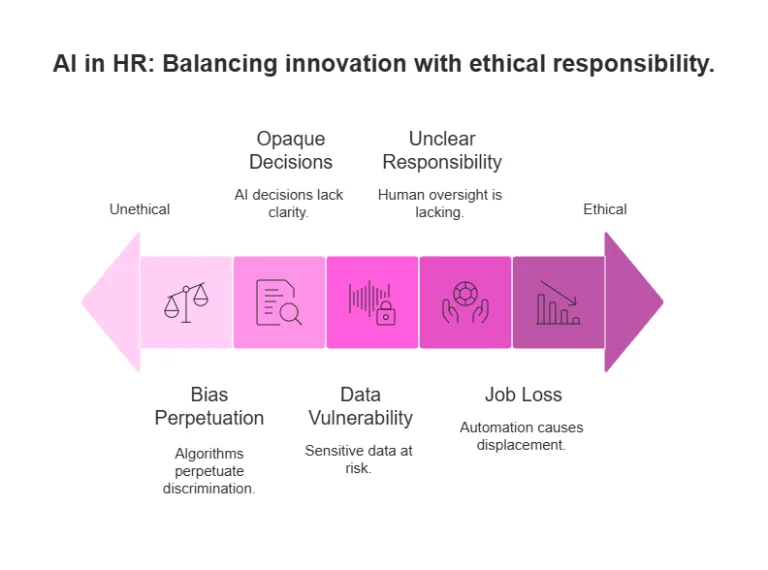
Laws around AI in HR are emerging quickly. From bias audit requirements to data protection rules and even proposed mandates that employees can opt out of AI-led assessments.
It’s wise to consult legal counsel when rolling out HR AI, especially in regulated industries. Even if something is technically legal, HR has an obligation to treat people fairly and with respect. A best practice is to develop an AI ethics policy for HR, stating principles like transparency, fairness, accountability, and data security. This guides how you’ll use or not use AI agents.
The Business Benefits of AI in HR
With the use of agentic AI systems, HR teams in SMBs can gain advantages that will help them make more profits and scale into bigger businesses. Here are the key benefits driving adoption of AI agents in HR:
- AI automates repetitive HR tasks, from resume screening to answering routine queries.
- AI cuts costs in hiring, payroll, and training by minimizing errors and manual work.
- Advanced algorithms can analyze performance metrics, engagement survey comments, or market salary data far faster than any human.
- 24/7 HR chatbots can answer employees’ common questions (“How do I update my benefits?”) instantly, any time of day.
- Personalized AI coaching and training recommendations make employees feel more valued and invested in.
- Whether you’re onboarding 5 new hires or 500, an AI agent can handle the increased workload with consistent quality
FAQs
Where do AI agents deliver the fastest ROI for SMEs?
What exactly is an “AI agent” in HR and how is it different from a chatbot?
Can AI agents actually lower recruitment cost-per-hire and speed up hiring?
How do AI agents reduce payroll errors and processing time?
Summing Up the Future of HR-AI Collaboration
If you are an HR leader, incorporating AI isn’t a “nice to have” anymore, it’s a must-have to stay competitive. And for SMB executives looking to improve HR outcomes and reduce costs, AI agents offer capabilities that can reshape your HR function completely.
Looking ahead, we can expect AI’s role in HR to continue expanding. Developments in autonomous AI agents mean future HR bots could handle even more complex tasks. Like crafting a recruiting strategy for you by analyzing market data, or one that can negotiate job offers within preset guidelines.
However, success in this new era will depend on the choices HR leaders make today. Focus on ethical, responsible AI adoption, the kind that boosts fairness, transparency, and employee well-being. Finally, keep the “human” in Human Resources.
AI can crunch data and streamline workflows, but empathy, creativity, and genuine connection are qualities of the human heart and mind. So, work hand-in-hand with AI agents. Neither completely depend on them, nor leave them without check.
Leave a Reply